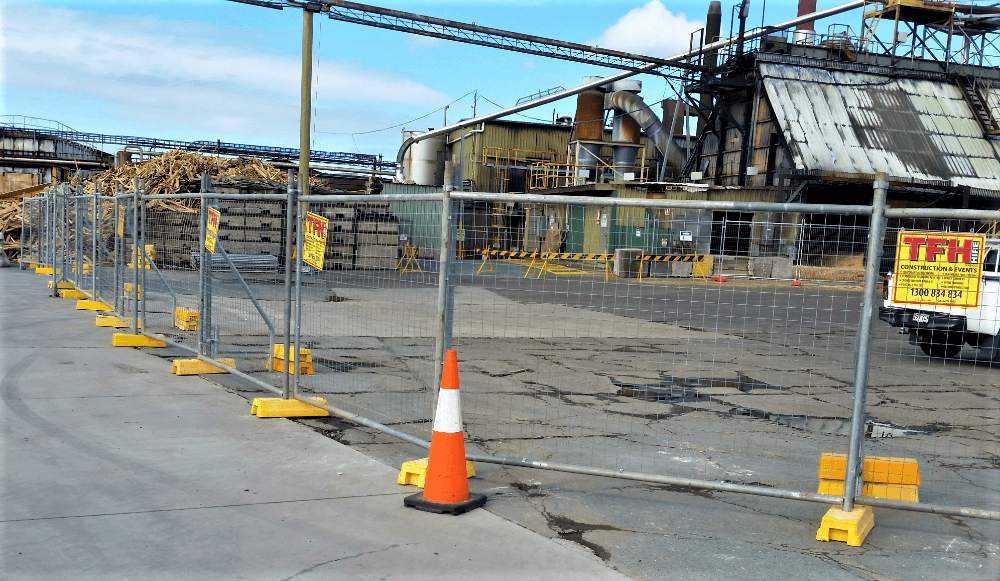
A playground upgrade has a fencing problem that a commercial site does not: its entire public is children, and its boundary is a park people use every day. Community projects, playgrounds, hall renovations, sports facility upgrades, streetscape works, share this shape. The work is modest; the public interface is total.
Why the public interface changes the specification
On a commercial site the fence mostly manages workers and the occasional passerby. On a community project the fence manages everyone else:
- Children treat barriers as equipment. Anything climbable will be climbed. Mesh selection and fence height matter more beside a playground than beside a warehouse.
- The site sits inside a place people keep using. The park stays open around the playground works; the hall car park still serves the netball courts. The fence must carve the work area out of a living space, cleanly.
- Desire lines do not move. If the works cut the path people walk, they will walk the shortest alternative whether or not it is the signed one. The pedestrian diversion has to be genuinely convenient or it will be ignored.
- The neighbours are the stakeholders. A council project's complaints line is the council. Dust, noise and appearance carry political weight that a private site never feels. Noise barriers and tidy screened fencing are cheap compared to a paused project.
The typical kit for a community project
Most community jobs assemble the same short list:
- Mesh perimeter around the work area, sized by the fencing calculator
- Self closing personnel gates where workers pass through often, because a propped gate beside a playground is a failure with a name on it
- Banner mesh carrying the council's project information and screening the work
- Water barriers anywhere the works touch a road or car park
- Silt fence where the site drains toward waterways, which parks usually do
- A portable toilet for the crew, placed away from public areas
Two details specific to public land
Pools and water features trigger their own standard. Community aquatic upgrades need pool rated barriers, not site mesh, the moment water is present. The distinction is covered in temporary pool fencing.
The council permit question inverts. On private work, the council is the authority you apply to. On council projects, the requirements still exist, pedestrian management, lighting, public liability arrangements, but flow through the project conditions. Either way the fence line gets audited.
Working in wildlife corridors
Parkland projects in some regions carry fauna conditions. Temporary koala fencing exists for exactly this: excluding wildlife from work areas in a compliant way. If the project approval mentions fauna management, this is the product line it means.
The community relationship
TFH supplies this category constantly and backs community organisations directly, from grassroots sport to regional festivals, which is covered in TFH in the community. For project managers, the practical value is a supplier who already knows what a playground upgrade needs.
Scoping a community project
Send the site plan or even a marked up aerial photo with a quote request, or get in touch. Related reading: construction perimeter design and the compliance guide.