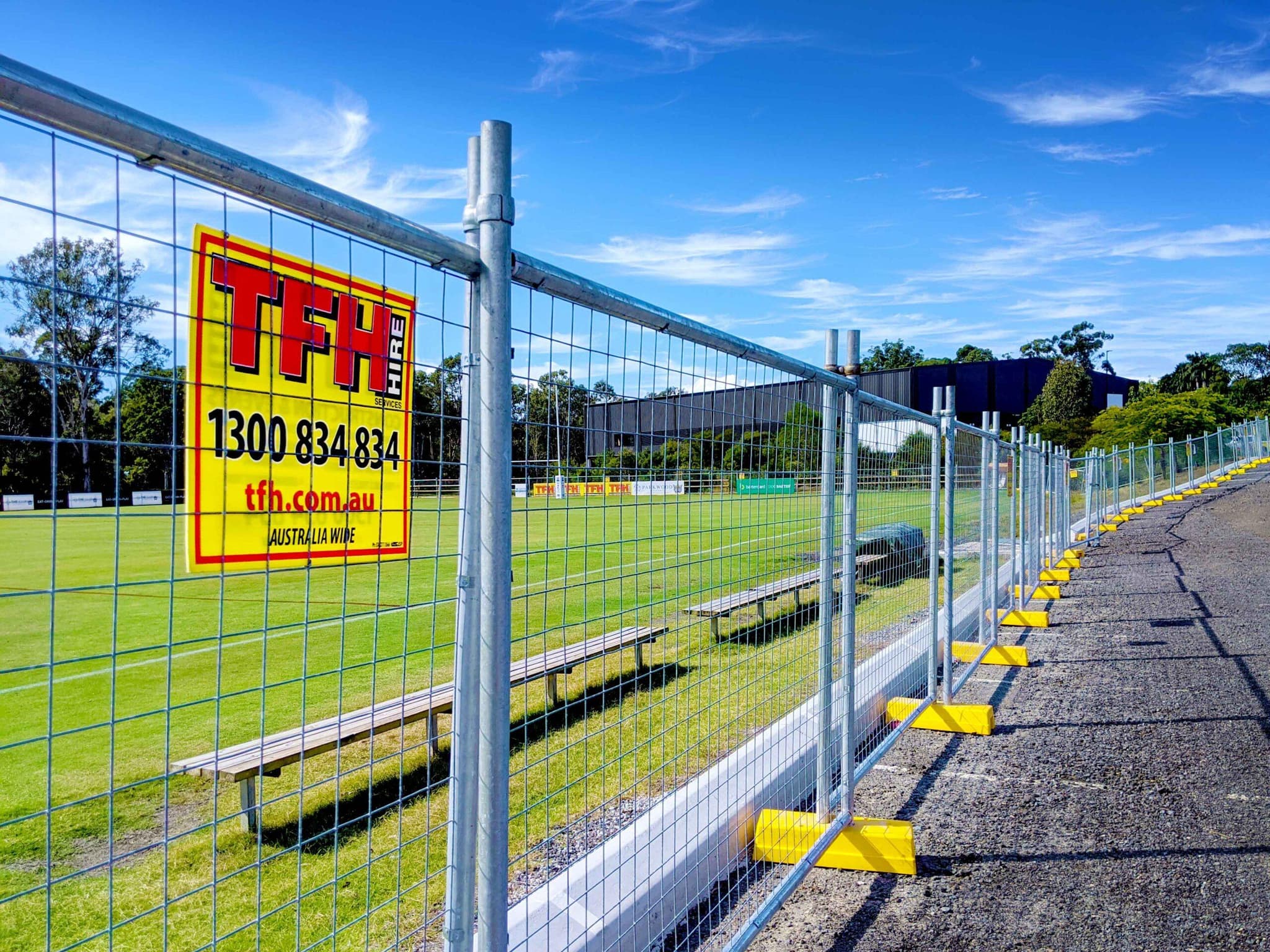
A construction site changes shape every week. Excavations open, materials arrive, plant moves, and the line between the work area and everywhere else moves with them. The temporary fence is the control that holds that line. It is also the control most often specified once at mobilisation and then never revisited, which is why a fence that was appropriate in week one is frequently inadequate by week twelve.
This guide covers what a perimeter is genuinely doing, and where runs tend to fail.
Four jobs a perimeter fence is doing at once
- Keeping people out. Most unauthorised entry is not theft. It is a shortcut, a curious kid, or someone who did not register that the site had started. A continuous, visible barrier removes the ambiguity.
- Keeping the public clear of live work. Falling objects, swinging loads, vehicle movements and open excavations all need a stand off distance. The fence line is what enforces it.
- Protecting plant and materials. Copper, fuel, power equipment and packaged materials are all portable and all saleable. A perimeter raises the effort and the visibility of removing them.
- Marking the boundary of the work. In a dispute about where the site began and public land ended, the fence line is the physical record.
Where perimeters actually fail
Failures cluster into a short list, and none of them are about panel quality.
Wind, once the run gets sheeted. An open mesh panel lets air through. Attach shade cloth or banner mesh and it becomes a sail. Runs that stand comfortably bare go over in the first real blow once they are sheeted. Bracing and additional ballast are not optional extras on a sheeted run, they are the thing that keeps it upright.
Gates placed for convenience rather than traffic. A gate in the wrong place gets propped open, and a propped gate is not a perimeter. Gate positions should follow how vehicles and people actually move, including where deliveries stage and where crews park. Where pedestrian access needs to close behind people every time, a self-closing personnel gate removes the discipline problem.
The gap nobody owns. Perimeters fail at their junctions: where the fence meets a building, a neighbouring property, a service pit or a driveway. These are the points that get left until last and then closed with whatever is nearby.
Drift. The fence gets moved for a delivery and not put back. Over a long project this is the single most common reason a compliant perimeter stops being one.
Choosing the right barrier for the exposure
Not every boundary needs the same thing.
- Standard mesh fencing suits most general perimeters where visibility is useful and the main risk is people wandering in.
- Hoarding panels give a solid face where you need to block sightlines, contain dust and debris, or present a clean frontage to a street.
- Pedestrian water barriers provide mass where the risk is vehicle movement rather than pedestrian curiosity, particularly along a live traffic edge.
- Ricochet barriers suit roadside work where a hard longitudinal barrier is warranted.
A note worth repeating: standard mesh fencing is not a pool barrier. If a pool, spa or water feature falls inside the work area, that is a separate standard and a separate product line. Our pool panels and temporary pool gate are built for it.
Making the fence do more than fence
A perimeter is the largest continuous surface on most sites, and it is free real estate for communication. Banner mesh carries site signage, mandatory PPE notices, project branding and contact details at a scale that a sign on a post cannot match. It also screens the work from the street, which reduces both complaints and casual interest.
Where dust or debris containment matters, shade cloth on the run helps. Just account for the extra wind load when you do.
Keeping it compliant through the whole job
- Walk the full perimeter at handover and confirm there are no gaps at junctions.
- Re-inspect after any severe weather, and after any week where the fence was opened for deliveries.
- Check that gates still latch and that none have been propped or removed.
- Reassess when the site changes: a new excavation, a change of access, or a new neighbour changes the risk.
- Document what you specified and why, so the layout can be justified if it is questioned.
Getting the layout right the first time
If you have a site plan, the fastest route to a workable perimeter is to talk it through before the equipment is booked. Use the fencing calculator to get a run length, then request a quote and we can work through gates, bracing and sheeting with you. Our fence installation service covers set out on site, and the temporary fencing FAQ answers the questions that come up most often.