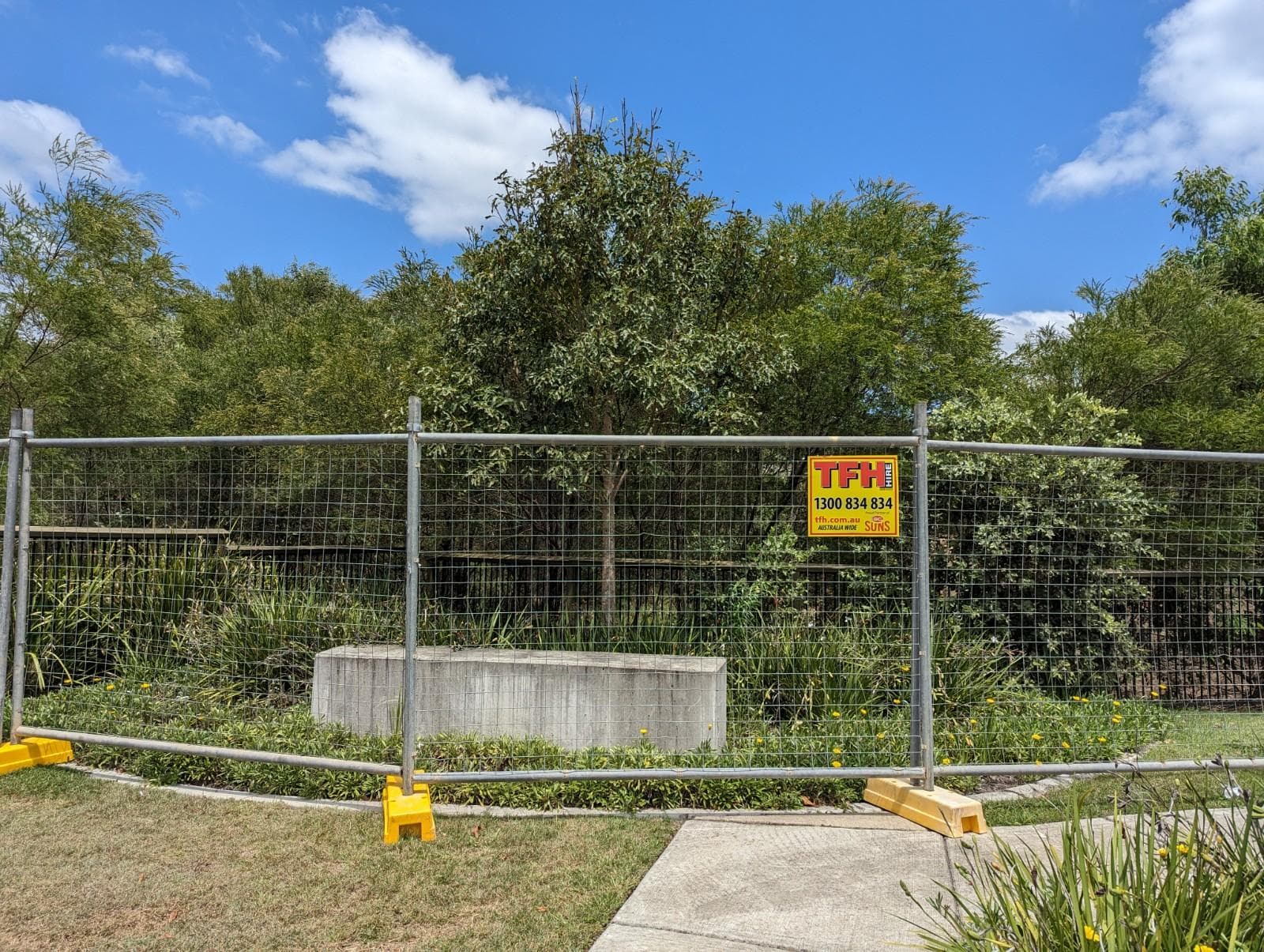
Every temporary fencing supplier says the same four things: quality product, competitive rates, reliable service, national coverage. None of it helps you choose.
Here is a more useful framing. There are only a handful of ways hire companies genuinely differ, and they all show up on the days a job does not go to plan.
Who actually makes the product
Most suppliers in this market import finished panels. TFH manufactures the large majority of its own range in Australia, which has three practical consequences.
The specification is consistent. Panels bought years apart still clamp together, because the dimensions are a decision rather than whatever the supplier shipped that season. On a long project with staged deliveries, that is the difference between a continuous perimeter and an improvised one.
Damaged stock gets repaired. When you own the specification, a bent panel or a cracked base is a repair rather than a write off. That keeps more fleet in circulation, which is what you feel when you need 400 metres on short notice.
Non standard requests are possible. A temporary koala fence exists because a customer needed one. So does the dog proofing panel. Importers cannot generally do this.
Fleet depth and where it sits
The question that matters is not whether a supplier has the product. It is whether they have it near you, on the date you need it, in the quantity you asked for.
A national branch network is the answer to that, and it is more than a coverage map. A branch close to the job means shorter lead times, cheaper delivery, and someone who can attend when the perimeter needs changing mid project. Our locations page lists the network.
The range beyond fencing
Most sites need more than a fence, and splitting the order across four suppliers creates four delivery windows and four invoices. The TFH range covers the rest of the site:
- Perimeter and screening: mesh fencing, hoarding panels, banner mesh and silt fence
- Traffic and pedestrian control: pedestrian water barriers, ricochet barriers and reflective traffic cones
- Crowd management: crowd control barriers and ticket offices
- Site facilities: portable toilets, ablution blocks and shower facilities
- Waste: portable skip bins, hook bins and wheelie bins
- Pool specific: pool panels and the matching temporary pool gate, built to the pool barrier standard that ordinary mesh fencing does not meet
Services that go with the equipment
Hire is the product, but several jobs need work rather than gear. Fence installation covers set out on site. Waste pumping services non sewered facilities. Custom banner printing turns a perimeter into signage. Site monitoring covers security surveillance, and event water services handle potable supply where there is no connection.
Quality management
TFH operates a Quality Management System independently certified to ISO 9001:2015. In practice this matters most on tendered work, where a principal contractor needs documented evidence rather than assurances. There is more detail on the certification page.
Family owned, and what that changes
TFH is Australian family owned and operated, and started in a backyard shed in Logan. The relevant consequence is decision speed. A branch manager who can solve a problem without escalating it to a procurement committee in another country is worth more on a Friday afternoon than any service level agreement.
Getting a number
TFH is quote based rather than list priced, because the right number depends on duration, region, quantity and what the site actually needs. Use the fencing calculator to work out run length, then request a quote.
Start with the temporary fencing FAQ if you have not hired before, or get in touch and talk to the branch nearest the job.