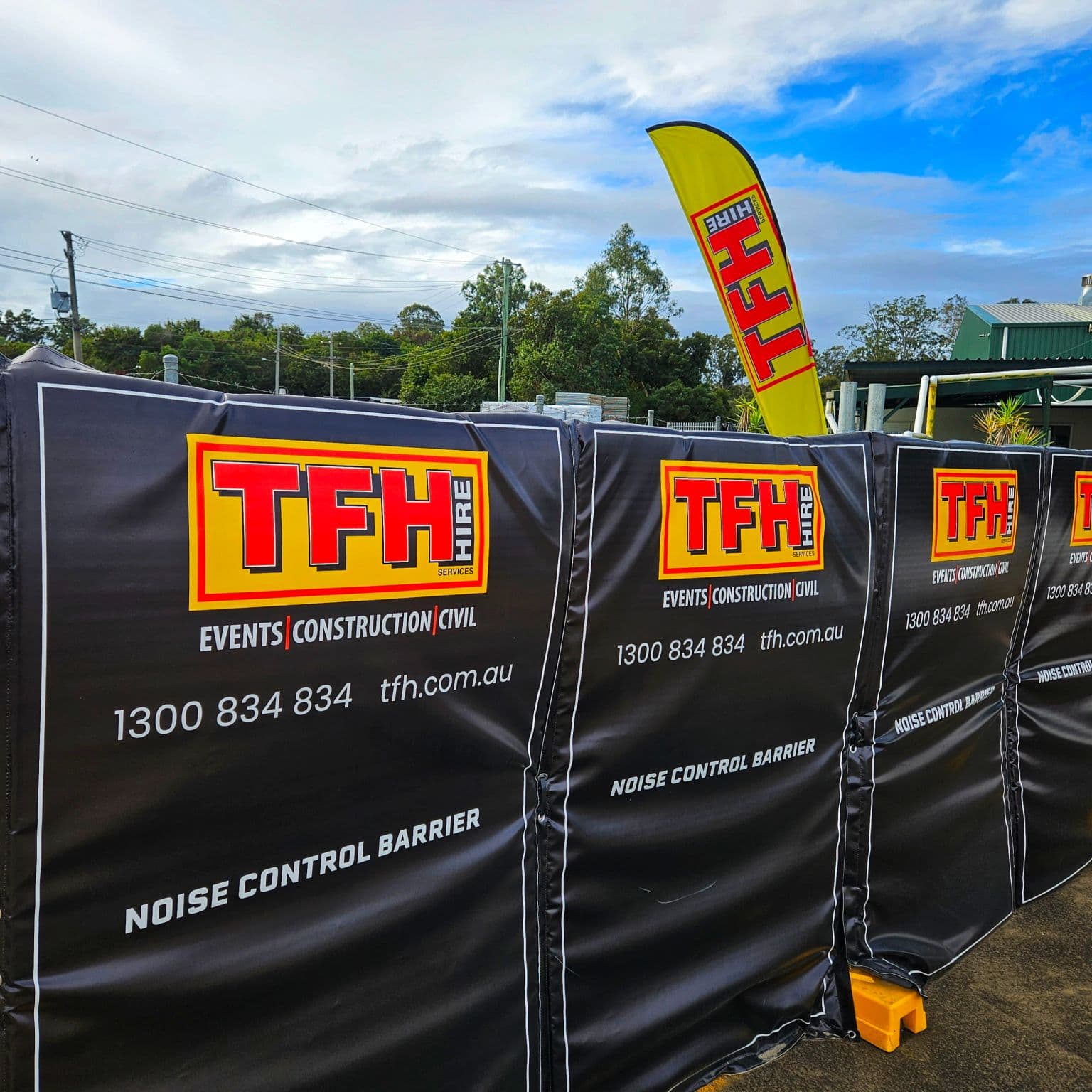
Noise is the site problem that arrives from outside. The crew adapts to it, the neighbours do not, and a pattern of complaints escalates from a grumble at the fence line, through council involvement, to restricted working hours that blow out the programme. The economics are simple: containing noise at the boundary is cheaper than losing working hours to it.
How a noise barrier works
A noise reduction barrier is an acoustic panel system that mounts to standard temporary fencing, turning the perimeter you already have into an attenuation line. It works through mass and absorption: sound energy hitting the barrier is partly absorbed and partly reflected back toward the source, rather than passing through an open mesh panel unimpeded.
Two placement facts do most of the work:
- Close to the source beats far from it. A barrier hugging the noisy activity, the saw station, the generator, the compressor bank, cuts more noise than the same barrier at the property line.
- Line of sight is the enemy. Sound diffracts over barriers, so height matters where receivers, windows, balconies, overlook the site. A barrier the neighbours can see over is doing half its job.
What it does for the site
Neighbour relations. Most councils regulate construction noise through permitted hours and nuisance provisions. Complaints trigger inspections; inspections find things. A visible, genuine attempt to manage noise changes the entire tone of that interaction.
Working hours. Sites seeking extended or weekend hours are far more likely to get them, and keep them, with demonstrated noise controls in place.
On site conditions. The same attenuation that protects the street protects the crew working beside the noisy plant, and makes communication on site easier.
Dust and sightline control as a side effect. An acoustic barrier is also a solid barrier: it screens the work from view and helps contain dust, which are the other two things neighbours complain about.
The wind load warning
An acoustic barrier converts an open mesh fence into a solid surface, and a solid surface is a sail. This is not a footnote: it is the most common failure mode for sheeted fencing of any kind. Runs carrying noise barrier need bracing and ballast specified as part of the installation, not added after the first storm. Exposed runs, corners and long straights need particular attention. Flag the barrier at quoting time so the supporting equipment is on the same truck.
Where it earns its keep
- Residential interface work: any site sharing a boundary with homes, which is most urban construction.
- Night and early works: where permits allow out of hours work, they nearly always condition it on noise management.
- Long duration sites: neighbour goodwill depletes over months. A barrier slows the burn.
- Events: outdoor stages and generator compounds backing onto residential streets benefit the same way, and the barrier doubles as the event perimeter.
Specifying it
The useful inputs are a site plan, the location of the noisiest activities, and where the nearest sensitive receivers are. From those, the barrier extent, height and bracing plan follow. Request a quote or get in touch.
Related reading: construction perimeter design and the temporary fencing FAQ.