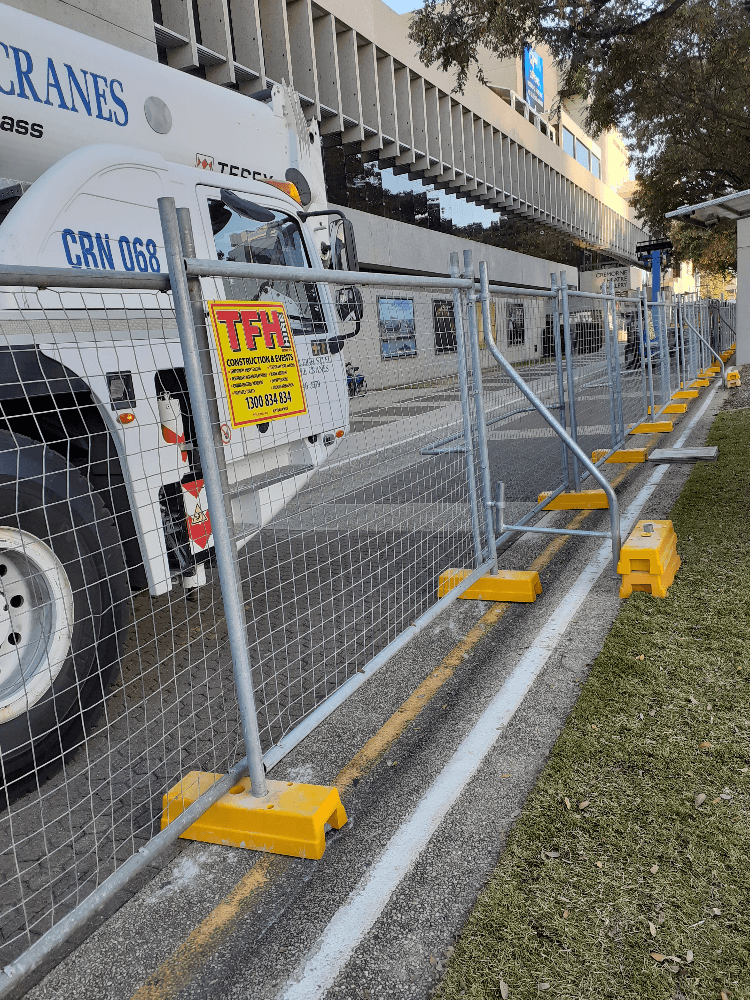
A festival perimeter has a harder job than a construction fence. It has to keep non payers out, keep patrons in the licensed area, move thousands of people through a handful of controlled points, and then open instantly anywhere the emergency plan says so. All of that, built in two days on a paddock, and gone by Tuesday.
The four jobs of a festival perimeter
Ticket line integrity. The fence is the edge of the paying area, and it gets tested: climbed, lifted and rushed at the quiet corners. The standard answer is fence height and mesh choice at the vulnerable stretches, solid hoarding where sightlines invite fence jumping, and patrol access along the outside.
Licensing compliance. For licensed events, the perimeter is the licensed area boundary. The fence line and the gate positions are effectively conditions of the licence, which means changing them on the day is not a site decision, it is a compliance decision.
Crowd flow. Perimeters concentrate people at gates, and gates are where crowd risk lives. Wide entries, separated in and out flows, crowd control barriers forming queue lanes, and ticket offices positioned so the queue forms away from the gate throat rather than across it.
Emergency egress. The perimeter must open where the emergency plan requires, at the width the plan requires, without tools or delays. Egress points are part of the original fence design, agreed with the safety officer, and kept clear on the ground for the whole event.
Zoning inside the site
The outer fence is only the first line. Inside, festivals subdivide: stage pits and front of stage barriers, back of house and production compounds, bar and licensed sub areas, camping boundaries. Each zone is its own smaller perimeter with its own access rules. Picket fencing handles the soft boundaries where sightlines and atmosphere matter; mesh handles the hard ones.
The unglamorous details that decide the weekend
- Ground conditions. Paddocks are not car parks. Soft ground changes ballast and bracing needs, and a wet forecast changes them again.
- Wind and banner mesh. Festival fences carry sponsor banners and screening, and sheeted runs in open paddocks catch serious wind. Bracing is specified with the banners, not after them.
- Build and strike windows. The site is usually available late and must be clear early. The fence plan has to be buildable in the window, which is a supplier capacity question as much as a design one.
- Noise boundaries. Where a stage backs onto neighbours, noise reduction barriers on the perimeter earn their keep in licence renewals. More in noise suppression with temporary fencing.
- Amenities inside the loop. Toilets, water and waste all live inside the perimeter and need servicing access through it. The event sanitation guide covers that side.
Planning sequence
The perimeter is designed off the site plan: boundary length, gate count and positions, zone fencing, egress points, then the equipment list. Doing this early matters because festival season concentrates demand, and the equipment for a large perimeter is a real volume commitment.
Request a quote with the site plan and dates, or get in touch. Related reading: crowd control barrier hire, choosing event fencing and sports event safety.