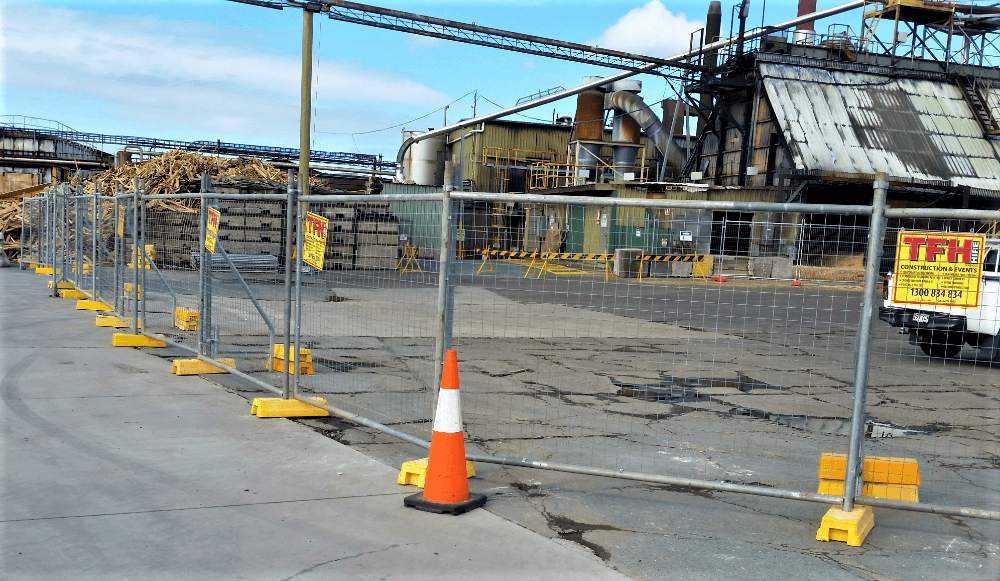
Twenty years ago a construction perimeter was a row of star pickets and orange mesh. Nobody audited it, nobody branded it, and nobody expected it to do anything but suggest a boundary. That world is gone. A modern site perimeter is contractual, audited, load rated and photographed, and the fence has evolved to match.
What changed
Three forces professionalised the temporary fence.
Safety regulation matured. Work health and safety law puts a positive duty on the person running the site to keep the public out of it. The perimeter is the primary control for that duty, which makes it safety infrastructure rather than site furniture. Principal contractors now audit fencing the way they audit scaffolds.
Sites got tighter and closer to people. Urban infill construction happens metres from homes, footpaths and traffic. The margin for a wandering pedestrian or a windblown panel shrank to nothing.
The fence became the site's public face. With banner mesh, the perimeter is the project's largest advertisement, its wayfinding system and its statutory signage board simultaneously.
The modern kit of parts
The contemporary range reflects those demands:
- Mesh panels in 25mm and 40mm apertures, where the smaller aperture resists climbing and the larger favours airflow and visibility
- Hoarding panels for solid screening, dust control and street frontages
- Engineered bases, clamps and bracing treated as structural components rather than accessories, because wind performance is calculated, not hoped for
- Purpose built gates, from personnel gates to self-closing units where access discipline matters
- Specialist lines for specific duties: pool panels built to the pool barrier standard, koala fencing for wildlife exclusion zones, silt fence for sediment control, and noise reduction barriers for residential interfaces
- Security fencing at 2400mm for sites where ordinary height is not enough
Specification is now a real decision
Because the fence does real work, the specification questions have real answers:
- What is the risk profile? A quiet subdivision lot and a school boundary need different fences.
- Will anything be attached? Shade cloth, banner mesh and acoustic panels all change the wind load and therefore the bracing and ballast.
- How long is the deployment? Long hires justify better gates and more robust bases, because the perimeter will be opened and moved hundreds of times.
- Who audits it? If a principal contractor or certifier will inspect, documentation of the equipment matters as much as the equipment.
- Does any part of it face water? A pool or water feature inside the site boundary triggers a different standard and a different product line entirely.
There is more depth on the safety side in how temporary fencing ensures construction site safety and on the legal side in the compliance guide.
Where it goes next
The direction of travel is more integration, not less: perimeters that carry site cameras, acoustic treatment and environmental controls as standard fittings, specified once as a system. The fence stopped being an afterthought some time ago. The sites that treat it that way now are the ones that end up explaining themselves to a regulator.
Specifying a perimeter
Use the fencing calculator for run length, then request a quote with the site's risk profile, and the specification conversation gets short. The full range is at products, or get in touch.