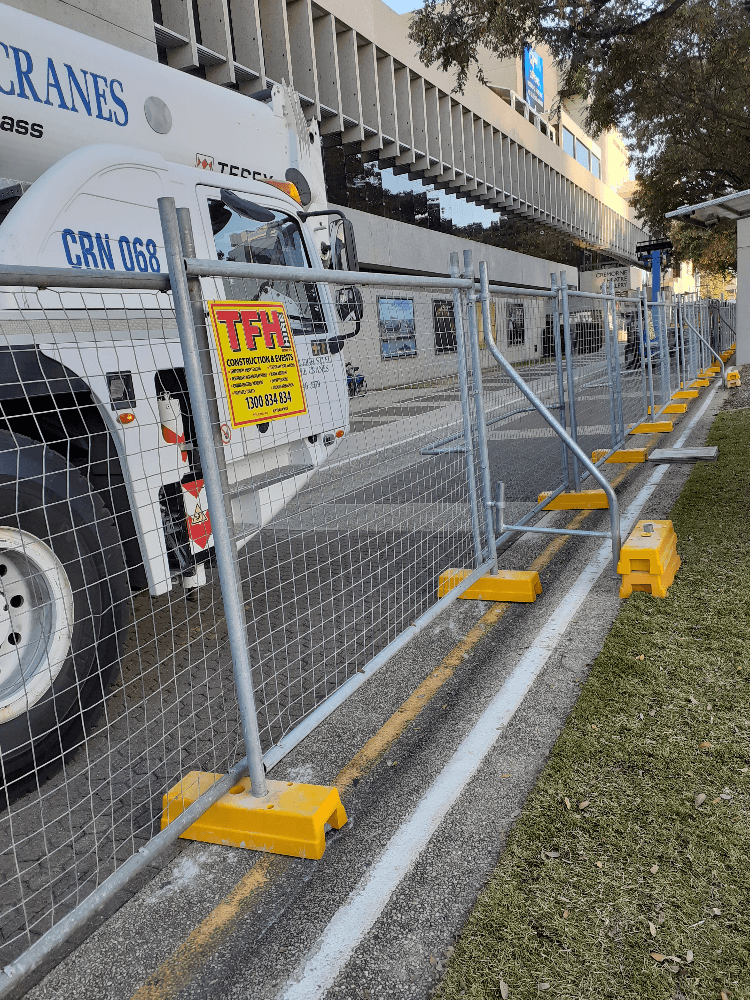
Sports events separate them from concerts and festivals in one structural way: the thing everyone came to see is a hazard zone. Fields of play, race courses and finish straights must stay clear of spectators while remaining completely visible to them. The fencing plan is how that contradiction gets resolved.
The field of play line
The boundary between spectators and sport is the core separation. What it needs depends on the sport:
- Ball sports want visibility and a defined edge: crowd control barriers or low picket fencing hold the line while keeping sightlines clean.
- Racing, running, cycling, motorsport support events, needs continuous line control along the course, with barrier density increasing at corners, crossings and anywhere spectators bunch.
- Finish areas concentrate everything: dense crowds, exhausted athletes, media and officials in one funnel. Finish chutes built from interlocked barriers, with a hard back of chute line, are the standard pattern.
The perimeter, if the event is ticketed
Club fixtures on open grounds may need no perimeter at all. The moment the event tickets, licenses a bar or needs controlled entry, the ground needs a real boundary: mesh fencing for the ticket line, gates positioned for queue space, and the layout logic covered in choosing event fencing and the festival security guide.
The zones nobody thinks about until the day
- Athlete and official areas. Warm up zones, marshalling areas and officials' compounds need boundaries that manage access without fortress aesthetics. Picket and crowd barrier both serve here.
- Family and junior zones. Junior sport brings unaccompanied children near car parks and roads. This is where fencing decisions carry the most weight, and where the car park interface deserves water barriers rather than a painted line.
- Equipment compounds. PA, timing systems and club equipment need overnight security: a small mesh enclosure, ideally with a site camera for multi day carnivals.
- The canteen queue. Every club knows the canteen line crosses the main walkway at the worst possible angle. Two barrier lanes fix a decade of congestion.
Weather and ground realities
Sportsgrounds are open, exposed and frequently soft. Wind loading on any sheeted fence is a live issue, sponsor banners on the boundary fence catch weather exactly like banner mesh anywhere else, and soft ground affects ballast. Multi day carnivals should also plan for ground damage where barrier lines concentrate foot traffic.
Amenities scale with the crowd
A ground built for two teams and a scattering of parents hosts a regional carnival with thousands. The permanent amenities do not stretch: portable toilets, hand washing and water stations belong in the same order as the fencing. The arithmetic is in the event sanitation guide.
For clubs: the support conversation
Community sport is central to what TFH backs, from grassroots rugby league to elite netball, and equipment support for club events is often more useful than cash. The detail is in how TFH backs local causes and on the community sponsorships page.
Planning a sports event
Send through the ground layout, expected attendance and the sport's specific needs, and the fencing plan follows. Request a quote or get in touch.