Crowd management is the discipline of making the desired path the easy path. Signage asks, stewards advise, but barriers decide: a well planned barrier line makes the right route so obvious that thousands of people take it without a single instruction. That is what crowd control barriers are for.
What a crowd barrier is
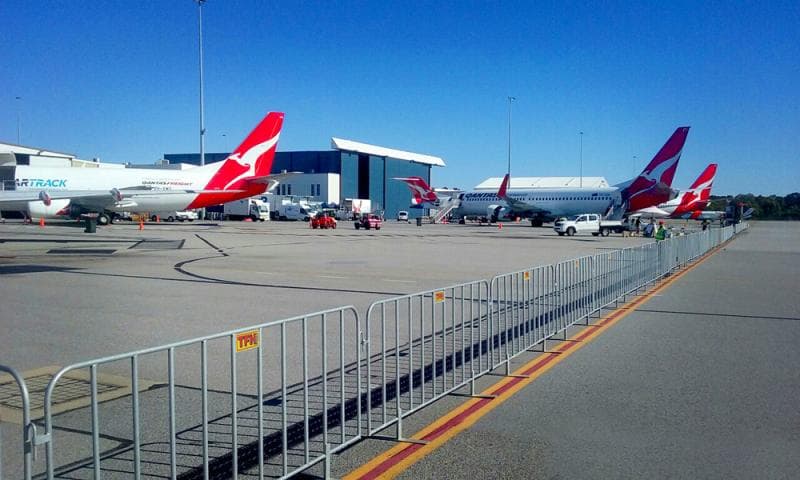
The standard unit is 2.1m long at roughly waist height, high visibility orange, interlocking end to end into continuous lines. The interlock matters: a connected line moves as a system and reads as a boundary, where scattered singles read as obstacles. Flat feet keep the line stable on hard standing and lawn alike.
The speed of reconfiguration is the tool's defining feature. A barrier line can be reshaped in minutes as the day moves from arrival queues to stage crowd to exit flow, which is something no fixed fence can offer.
The jobs barriers do well
- Queue formation: entry lanes, bar and food service lines, ticket windows at ticket offices
- Front of stage standoff: a maintained gap between crowd and stage infrastructure
- Flow separation: keeping entering and exiting streams apart, protecting cross routes
- Exclusion edges: production areas, cable runs, plant, first aid access
- Progressive release: metering a crowd out of a venue in controlled stages rather than one surge
The jobs barriers must not be given
Site perimeters. A waist height barrier is a suggestion, not a boundary. Ticket lines and licensed area edges need proper fencing, covered in choosing event fencing.
Vehicle separation. A crowd barrier does not slow a car. Where pedestrians meet vehicle routes, mass is required: water barriers exist for exactly that interface.
Crowd load bearing. Standard barriers manage ambulatory crowds. A dense, pushing crowd at a major stage front is a different engineering problem requiring purpose built stage barrier, and an event expecting that density needs it in the safety plan.
Planning a barrier layout
- Draw the flows, not the fences. Where do people arrive, queue, gather, cross and leave? The barrier lines fall out of the flow map.
- Size the queues honestly. A queue lane holds fewer people than it looks. Underestimating queue space is the most common layout error at gates.
- Keep service routes open. Emergency access, waste collection and bar restocking all need routes through the barrier plan that do not cross dense crowd.
- Plan the reconfigurations. If the layout changes between afternoon and evening, someone owns moving the barriers and the plan says when.
- Count generously. Runs always come up short on the day; the spare dozen barriers cost little and rescue much.
Beyond events
The same barriers do steady work outside the events calendar: pedestrian channels on construction sites, queue management at sales and openings, exclusion lines during maintenance works. The construction side pairs them with the heavier equipment covered in traffic management.
Booking barriers
Barrier demand peaks with the events calendar, so quantities are easiest secured early. Request a quote with expected attendance and the site plan, or get in touch.
Related reading: festival perimeter security and event sanitation planning.