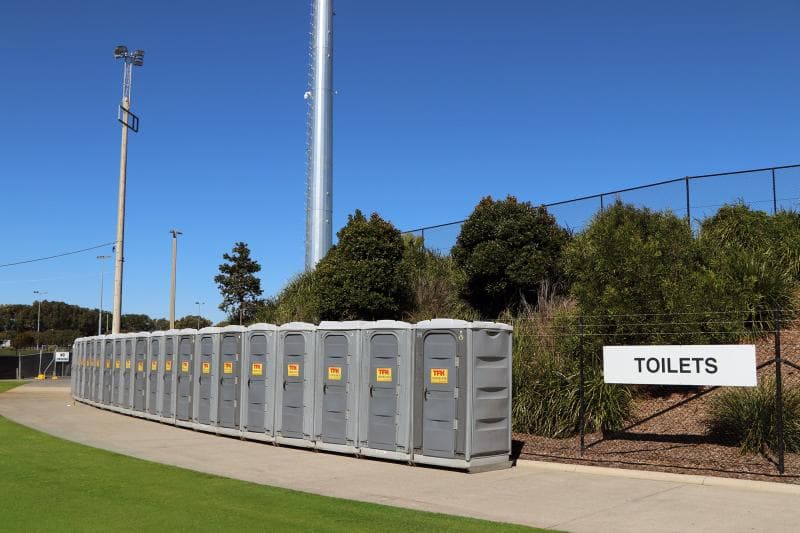
No attendee has ever praised an event's toilets. Plenty have left early, complained publicly or refused to return because of them. Sanitation is pure downside risk, which is exactly why it rewards being planned properly and early.
The arithmetic that decides everything
Toilet count is driven by four numbers:
- Peak attendance, not tickets sold. An all day event with rolling arrivals peaks lower than a concert where everyone is inside for the headline act.
- Event duration. Requirements step up meaningfully once an event passes the few hour mark, and again for multi day events.
- Alcohol service. Licensed events need materially more capacity. The industry rules of thumb all scale the count up when alcohol is served.
- Gender split and accessibility. Provision has to work for the actual crowd, and accessible facilities are a requirement rather than an option.
Local councils and event permits frequently specify minimum ratios, so check the permit conditions before finalising the order. When the arithmetic and the permit disagree, the permit wins.
Placement is half the outcome
The same number of toilets can produce five minute queues or thirty minute queues depending on where they sit.
- Cluster, do not scatter. Banks of units clear queues faster than singles dotted around, and they concentrate the servicing effort.
- Put banks where the people already are: near bars, food areas and exits, but offset enough that queues do not tangle with traffic flows.
- Light the route and the units. An unlit toilet bank after dark effectively leaves service.
- Keep truck access clear. Every bank needs a service vehicle to reach it, including mid event for multi day shows.
- Accessible units go on accessible routes, not just anywhere flat.
Matching units to the event
The range runs from basic to premium, and most events mix tiers:
- Fresh water portable toilets as the core provision
- Accessible units distributed across every bank
- Toilet trailers where a step up in amenity is wanted, such as VIP and corporate areas
- Hand wash stations alongside every bank, with hot water where food is served
- Ablution blocks for multi day events with camping, where showers become part of the requirement
Servicing: the invisible half of the plan
For a single day event, servicing usually means pre event delivery and post event collection. For anything longer, the plan needs:
- A mid event service window, scheduled for the lowest traffic period
- Consumables replenishment, because a stocked unit that is out of paper counts as a failed unit
- A holding arrangement on unsewered ground, which means waste tanks sized to the event and a pump out plan
There is more on the unsewered mechanics in waste management on non sewered sites.
Water supply belongs in the same order
Hand washing, drinking water and caterer supply all need water where the event is, not where the mains are. Water hydration stations, the water hub for bulk supply, and event water services cover the range. Ordering water and sanitation together means one delivery window and one site contact.
A planning sequence that works
- Confirm peak attendance, duration and licensing.
- Check permit conditions for mandated ratios.
- Set the unit count and mix, sizing generously if alcohol is served.
- Map banks onto the site plan against crowd flows and truck access.
- Lock the servicing schedule, including mid event windows for multi day shows.
- Add hand washing, lighting and water supply to the same order.
Getting it booked
Event sanitation is capacity constrained on peak weekends, so the earlier the booking the better the options. Request a quote with your dates and expected numbers, or get in touch.
Related reading: event planning in 11 steps and crowd control barrier hire.