"What fence do I need for my event?" is usually the wrong question, because most events need several. The perimeter, the queues, the stage front and the sponsor zones are different jobs, and the right answer is a mix. Here is how each piece earns its place.
Mesh fencing: the perimeter workhorse
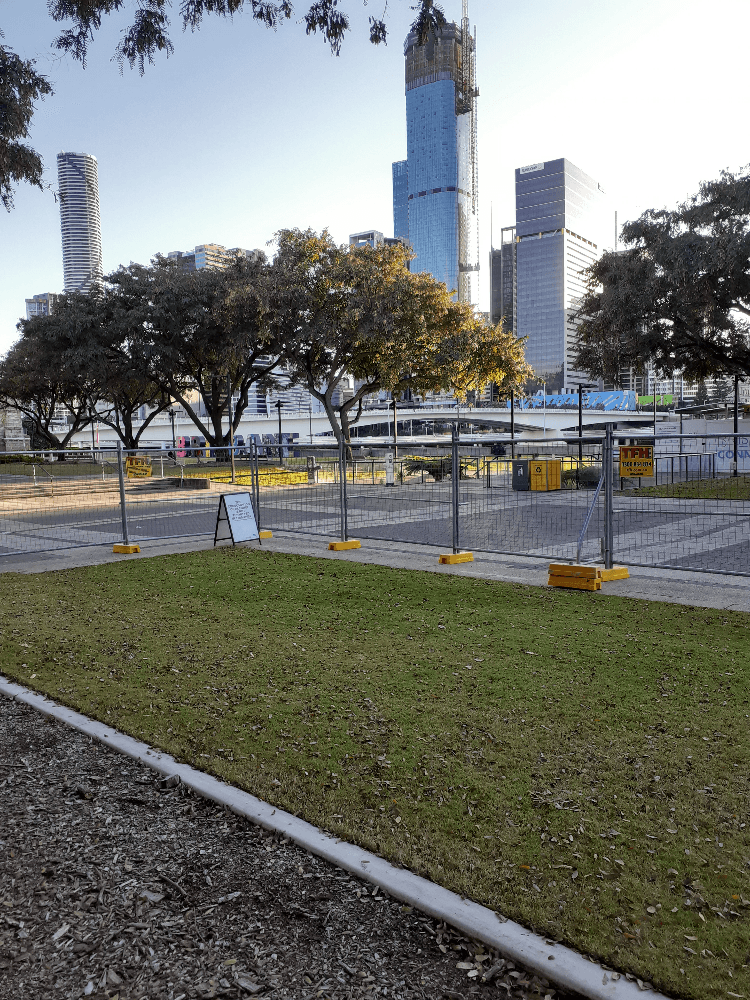
Standard temporary mesh is the boundary of the event: it defines the site, carries the ticket line, and takes the banner mesh. Its virtues are height, continuity and economy over long runs. Where the boundary is also a security line, tighter 25mm mesh resists climbing, and solid hoarding panels close the sightlines that tempt fence jumpers.
If the event is licensed, remember the perimeter is doing legal work too: it defines the licensed area, and its gates are compliance features. The full logic is in our festival security guide.
Crowd control barriers: people, not property
Crowd control barriers are the flow tool: queue lanes at gates and bars, standoffs at stage fronts, pedestrian channels between zones. They are quick to reconfigure as the crowd moves through the day, which is their whole advantage over fixed fence.
The classic mistake is using crowd barriers as the site perimeter. At 2.1m long and waist height, they mark a line beautifully and stop nobody who wants to cross it. Perimeters need fence; crowds need barriers. More in crowd control barrier hire.
Picket fencing: the soft boundary
White picket fencing, in heights from 0.8m to 1.2m, handles the boundaries that are about definition rather than security: VIP lawns, sponsor activations, outdoor dining areas, family zones. It reads as an invitation with an edge, photographs well, and keeps sightlines open, which is exactly what those areas want.
Water barriers: where vehicles are part of the picture
Wherever the event interfaces with moving vehicles, car park edges, drop off zones, roads past the entry, the barrier needs mass. Pedestrian water barriers provide it, with extensions where height matters too. The vehicle side of event planning is covered in portable arrow boards.
Building the mix: three worked examples
A community fun run. Water barriers where the course crosses or follows roads, crowd barriers at the start and finish chutes, picket around the family village, and a short mesh run securing the equipment compound overnight.
A licensed food and wine festival. Full mesh perimeter defining the licensed area, hoarding along the street frontage, crowd barriers forming entry queues and bar lanes, picket around dining lawns, and banner mesh carrying sponsors along the approach.
A regional agricultural show. Mesh perimeter for the ticket line, crowd barriers at pavilion entries and arena viewing lines, picket for the animal nursery boundary, and water barriers separating the car park field from the pedestrian route to the gate.
The questions that produce the right list
- Is any boundary doing licensing or ticketing work? That is mesh.
- Where do queues form? That is crowd barrier.
- Which boundaries are aesthetic or organisational? That is picket.
- Where do people and vehicles share space? That is water barrier.
- What gets sheeted with banners, and is the bracing specified for it?
- Where does the emergency plan need the boundary to open?
Getting the list priced
Send the site plan, or even a rough sketch with dimensions, with a quote request, or get in touch and we can build the mix together. The event planning guide covers the rest of the checklist.