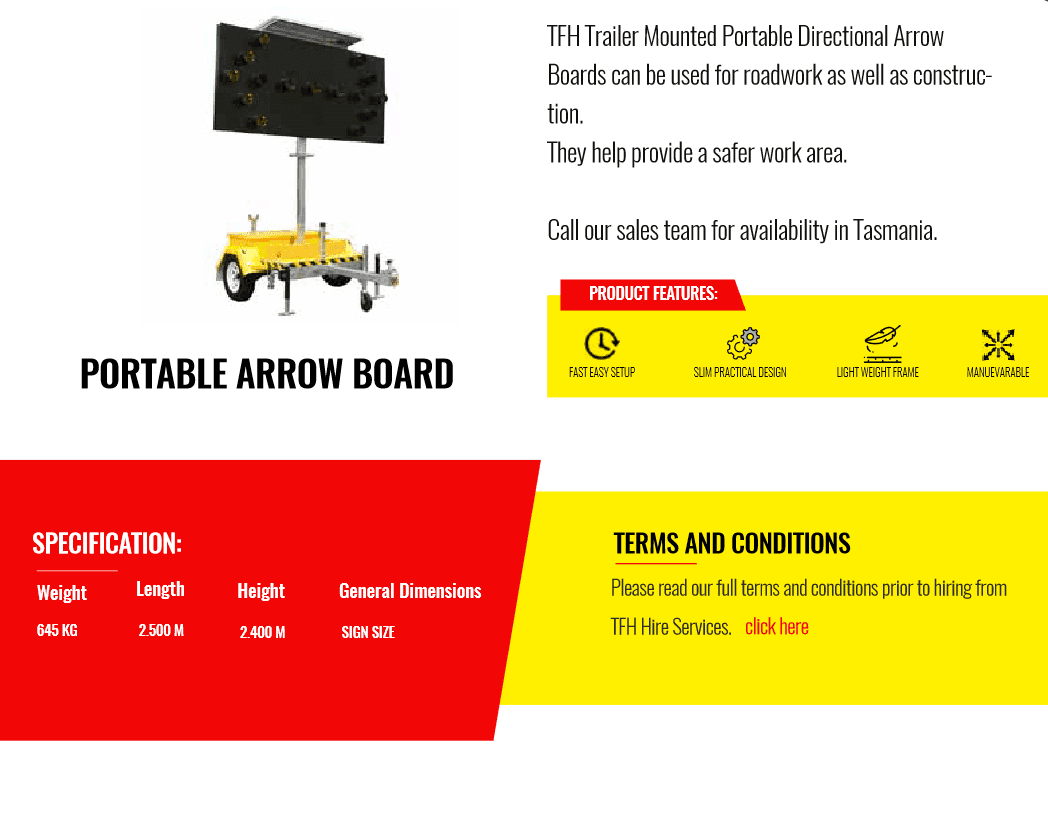
Event traffic is unusual traffic. Drivers are somewhere unfamiliar, looking for an entrance they have never used, at exactly the moment several hundred other people are doing the same thing. Static signage assumes a driver who knows to look for it. A portable arrow board does not: it is bright, moving and legible from hundreds of metres, which is what earns attention from a driver processing too much at once.
The three jobs arrow boards do at events
Approach warning. The most important placement is before the event, not at it. A board positioned upstream tells traffic that something is ahead: slowing vehicles, turning queues, pedestrians. The single most effective intervention for the road outside an event is making the event visible before the brake lights are.
Directional guidance. Getting thousands of cars into a paddock car park through one gate is a flow problem. Boards at the decision points, the turn off, the fork between car park fields, the exit route, replace a stressed volunteer waving their arms with an instruction nobody misses.
Lane and route closure. Where an event closes a lane, a road section or a car park aisle, the arrow board is the standard way to move traffic across early and smoothly rather than at the last moment.
Placement principles
- Upstream of the decision, not at it. A driver needs time to act on the instruction. Place boards well before the turn or merge they direct.
- Sight lines first. A board behind a crest, a bend or parked cars is spending its brightness on nobody.
- One instruction per location. A board plus three corflute signs plus a marshal is noise. Let the board do the talking at its spot.
- Plan the night configuration. Boards are at their best after dark, but the rest of the route needs to keep up: reflective traffic cones rather than plain ones, and lit pedestrian routes.
The equipment around the board
An arrow board directs vehicles; the rest of the traffic plan shapes where they can go.
- Reflective traffic cones build the tapers and lane lines the board announces
- Pedestrian water barriers put mass between vehicle routes and foot traffic, which matters most at the car park to venue interface
- Crowd control barriers manage the pedestrian side once people are out of their cars
- Custom banner mesh on perimeter fencing carries the fixed wayfinding: gate names, entry conditions, sponsor messaging
Who is responsible for what
For events touching public roads, the traffic management plan is usually a permit condition, and works on the road itself typically require accredited traffic management. Equipment placement inside the event footprint, car parks, internal routes, pedestrian interfaces, is the organiser's domain. Arrow boards serve both: the accredited plan on the road, and the internal flow plan inside the gate. Check what your permit requires before finalising either.
A note on construction use
Everything above applies double on construction sites, where the traffic is not attendees but the general public passing a work zone. The same boards, cones and barriers form the standard toolkit. Our guides to traffic management and water barriers and traffic equipment cover that side.
Booking for an event
Arrow boards are in heaviest demand exactly when events cluster, so book with the rest of the traffic equipment rather than as an afterthought. Request a quote with your dates and site plan, or get in touch.