Amenities are the least discussed part of a site setup and one of the most revealing. A crew can tell within a day how a site is run, and the toilet block is where they look.
There is also a legal dimension that gets forgotten. Work health and safety regulations require that workers have access to adequate and accessible facilities, including toilets, hand washing and drinking water. This is an obligation, not a courtesy, and it does not lapse because the site is remote or the job is short.
What adequate actually means
Regulations describe outcomes rather than a single number, but the practical requirements are consistent:
- Enough units for the number of workers, scaled to the peak headcount rather than the average
- Reachable without a long walk, because a facility nobody can get to in a break is a facility nobody uses
- Hand washing, which is a separate requirement from the toilet itself
- Clean and serviced, on a schedule rather than when someone complains
- Lit and safe to reach, which matters on winter afternoons and night work
- Separate facilities where required, and accessible facilities where the workforce needs them
Sizing the amenities
The usual mistake is sizing for the average crew rather than the peak. A site with eight workers most weeks and thirty during a pour needs to handle the thirty.
Two variables drive the decision: headcount and site duration. A short duration job with a small crew is a straightforward single unit. A long duration site with a large workforce needs block facilities, and the servicing schedule becomes as important as the unit count.
Matching the facility to the site
The range covers genuinely different situations rather than being one product in several sizes.
Fresh water portable toilets are the standard site unit, self contained and suited to sites with no plumbing.
Sewer connect units suit sites where a sewer connection exists, removing the pump out cycle entirely.
Accessible portable toilets are required where the workforce includes anyone who needs them, and are worth specifying by default on public facing sites.
Ablution blocks suit larger or longer sites, with multi pan configurations up to six pans and options including showers, which matter on remote or long duration projects.
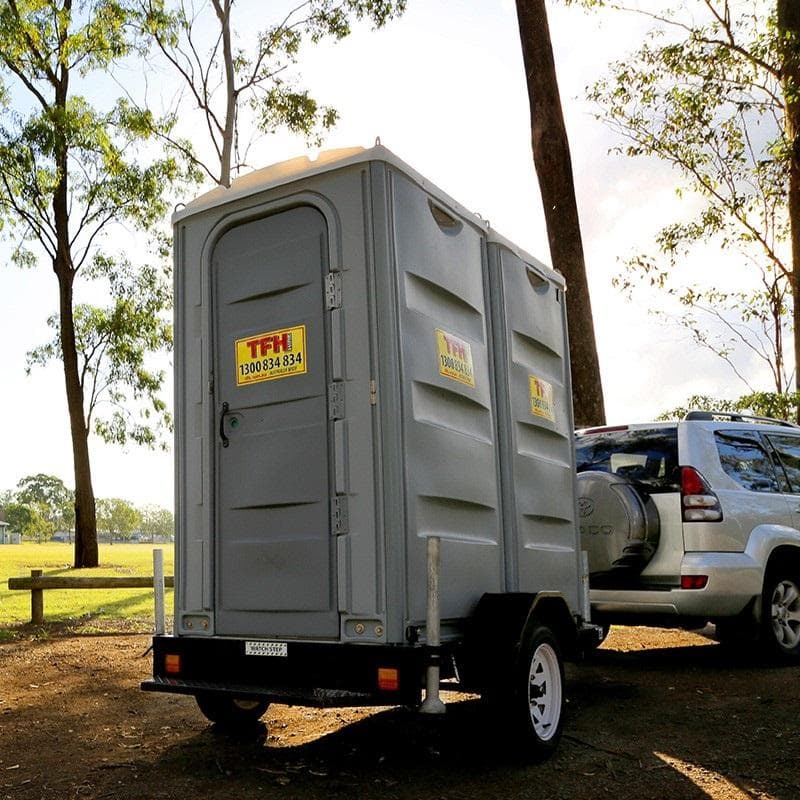
Toilet trailers suit sites where the facility needs to move as the work moves, or where placement access is difficult.
Hand washing is not optional
The most commonly skipped requirement is hand washing, on the assumption that the toilet unit covers it. Provide a dedicated facility. A hot water hand wash station is a small line item next to the cost of a gastro outbreak running through a crew mid programme.
On sites handling contaminated material, demolition waste or sewage infrastructure, this stops being about comfort and becomes the primary control against ingestion exposure.
Servicing is the part that gets forgotten
The unit is easy. The servicing schedule is what determines whether the facility is usable in week six.
Pump out frequency depends on unit type, headcount and usage. Under service it and the facility becomes unusable, which means it stops being an amenity in any meaningful sense. Our waste pumping service covers scheduled servicing, and on non sewered sites waste tanks provide the holding capacity between visits.
Agree the schedule when you book, not when there is a problem.
Drinking water belongs in the same conversation
Toilets and hand washing are half the amenity requirement. Access to drinking water is the other half, and on an Australian site in summer it is the half with the fastest consequences. Water hydration units and bubblers cover it, and there is more detail in our article on hydration on Australian worksites.
A short specification checklist
- Size for peak headcount, not average.
- Provide hand washing as a separate facility.
- Include accessible facilities where the workforce requires them.
- Locate units within a reasonable walk of the work face.
- Agree the servicing schedule at booking, and revise it if headcount changes.
- Confirm drinking water is covered as part of the same setup.
- Check lighting and access for early starts and late finishes.
Setting up a site
Amenities are usually ordered alongside fencing, bins and site sheds, which is worth doing in one conversation rather than four. Request a quote with your headcount and duration, or get in touch.
More on the rest of the site setup in choosing the right industrial waste bin and non sewered site waste management.