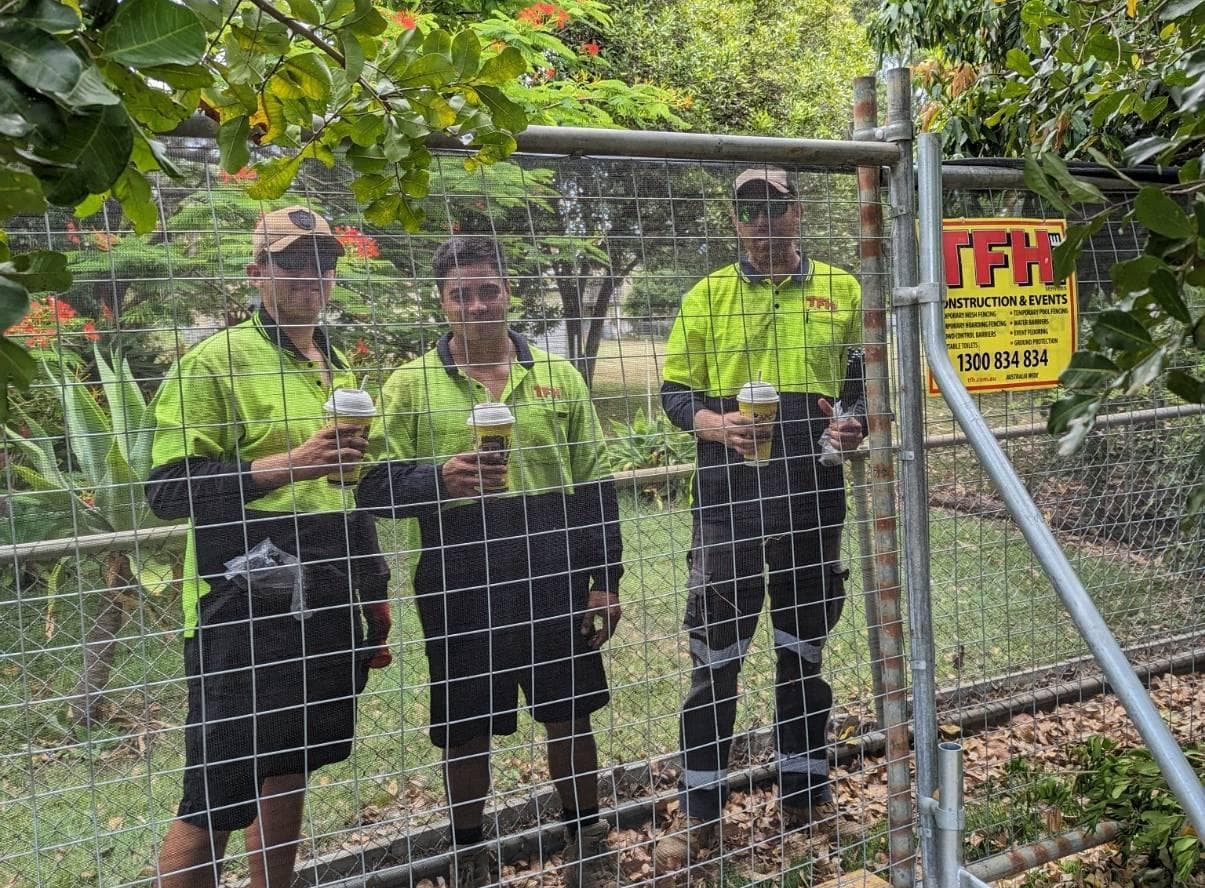
The hire industry does not appear on many careers-day posters, which is its loss. It is an industry where the work is tangible, the customers are real, and a branch team can see the events and projects they equipped on the news that weekend. TFH has been doing that work for over two decades, from a single Logan operation to branches across Australia, while staying family owned the whole way.
What the company actually does
TFH supplies the temporary infrastructure that events and construction sites run on: fencing, barriers, amenities, waste, water and site security, most of it manufactured in house in Australia. The full picture spans everything from a backyard pool fence to the 2018 Commonwealth Games perimeter.
That mix shapes the roles. The company needs drivers and installers who represent it on customer sites, branch and operations people who make fleet logistics work, manufacturing and repair trades who keep an Australian made fleet in circulation, and sales and support people who turn a site plan into an equipment list.
Why family ownership matters to the day job
Plenty of companies claim culture; ownership structure is what enforces it. A family owned business with the founder's name still on the story makes decisions with short chains: a branch manager can solve a customer problem without a committee, and an employee with a better way of doing something is talking to people who can say yes. The company's community sponsorship activity, grassroots clubs, regional festivals, local sport, comes from the same place.
The three words, in practice
Safety is the industry's licence to operate. TFH equipment is other people's safety system, perimeters, pool barriers, traffic separation, so the internal standard has to be higher than the ones we help customers meet. That shows up in how installs are done, how trucks are loaded, and what gets refused.
Innovation here means practical product development, not slideware. The koala fence, noise reduction barriers and the breadth of the manufactured range exist because someone needed something and the company could build it. Manufacturing in house means ideas become products without a supplier negotiation.
Integrity is mostly the quiet version: quoting what the job needs rather than what the customer will pay, honouring availability commitments in peak season, and running a quality system certified to ISO 9001:2015 so the standards are audited rather than asserted.
What progression looks like
A national branch network creates the career lattice smaller operators cannot: yard to driver to installer to leading hand; branch roles into operations or state roles; depot experience into fleet, manufacturing or sales. People who understand the equipment and the customers are the promotion pool, and the company's growth keeps creating the vacancies.
Interested?
Current openings are on the careers page, and speculative interest is welcome through the contact page, the branch network means the right role is sometimes one suburb over from where you asked.